
So You Have a Story to Share? How to Write a Memoir in 6 Steps
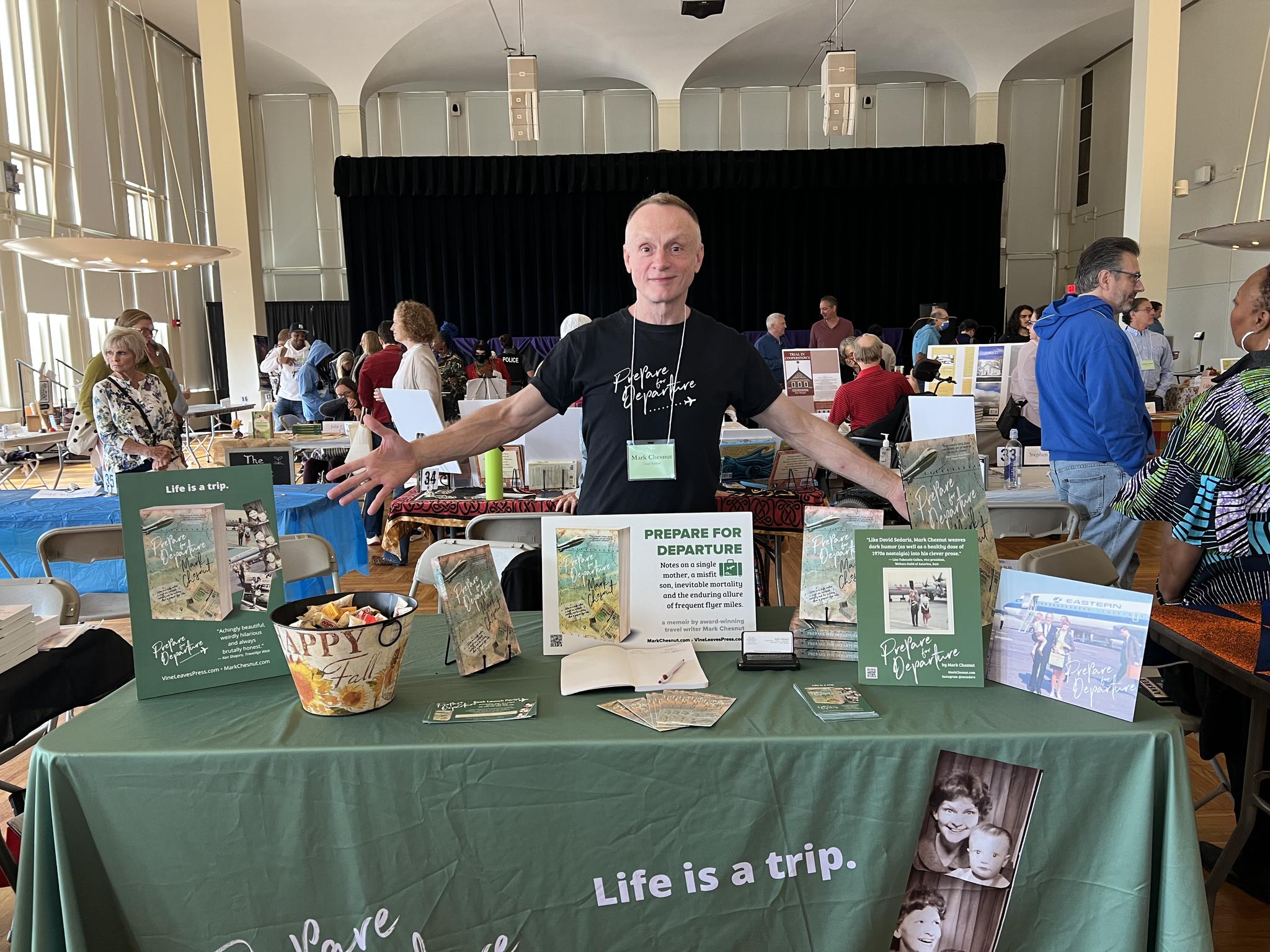
Por Mark Chesnut, autor, Prepárese para la salida: Notas sobre una madre soltera, un hijo inadaptado, la mortalidad inevitable y el atractivo perdurable de la milla de viajero frecuentes (Vine Leaves Press, 2022)
TODOS tiene una historia que contar. Y todas nuestras historias son válidas y vale la pena contarlas. Pero en realidad armar tu historia y presentarla frente a otras personas es toda una tarea.
Este resumen cubre seis pasos importantes que debe estar preparado para dar, desde que comienza a escribir hasta después de la publicación de su libro.
CÓMO ESCRIBIR UNA MEMORIA
Las memorias tratan sobre ti y tu historia. Pero escribir un gran libro y presentarlo a otros es un proceso complejo. Y una vez que comiences, si quieres tener éxito, pronto te darás cuenta de que en realidad ¡NO se trata solo de ti!
En este taller, compartiré algunos consejos internos sobre cómo comenzar su memoria, cómo elaborar la historia ideal y, lo que es igualmente importante, cómo posicionar su memoria desde una perspectiva de marketing y presentarlo a agentes literarios, editores y público en general una vez que esté disponible.
Voy a compartir algunas de las lecciones que aprendí como autor mientras creaba y comercializaba mis propias memorias, “Prepárese para la partida: notas sobre una madre soltera, un hijo inadaptado, la mortalidad inevitable y el atractivo perdurable de las millas de viajero frecuente”.
Primero te contaré un poco sobre mí, para que sepas de dónde vengo.
En primer lugar, tengo mucho Kentucky en la sangre. Mi madre nació aquí en Louisville, mi padre nació cerca de Barbourville y está enterrado aquí en el cementerio Cave Hill. Mis abuelos eran del oeste de Kentucky. Entonces tengo raíces familiares en todo el estado.
Vivo en la ciudad de Nueva York y he sido escritor de viajes durante casi 30 años. Me encanta explorar el mundo mientras escribo sobre consejos de viaje, reseñas de hoteles e ideas de vacaciones. Mi trabajo ha aparecido en algunos de los principales medios de comunicación de la industria de viajes.
PERO cuando decidí cambiar de tema y escribir mis primeras memorias, me sentí más fuera de lugar que un viajero frecuente sin tarjeta de embarque. Después de todo, la no ficción creativa y las historias de vida están muy lejos de las reseñas de hoteles y las recomendaciones de viajes.
¿Cómo podría mi escritura tener éxito en un género completamente nuevo?
Bueno, la verdad es que no importa cuál sea tu experiencia. Todos tenemos una historia que vale la pena contar. Es sólo cuestión de encontrar la mejor manera de hacerlo y la mejor manera de contar esa historia frente a otras personas.
Realmente no importa a qué te dediques en este momento, si tienes la capacidad de compartir tu historia con éxito como una memoria.
Así que comencemos con lo básico.
¿CUÁL ES LA DIFERENCIA ENTRE UNA MEMORIA Y UNA AUTOBIOGRAFÍA?
Las memorias no son autobiografías.
Una autobiografía es la historia completa de tu vida, de principio a fin.
Las memorias se parecen más a una subcategoría de autobiografías. Está más enfocado, generalmente en un período de tiempo específico de su vida, o en un evento o grupo de eventos específicos de su vida.
Ejemplos clásicos de memorias incluyen Walden, de Henry David Thoreau, que cuenta la historia del tiempo que el autor pasó en una cabaña cerca de Walden Pond. Ejemplos más recientes incluyen Corriendo con tijeras, de Augusten Burroughs y Llorando en H Mart de Michelle Zauner.
Muchas celebridades también escriben memorias, pero te advertiré sobre ellas en solo unos minutos.
Aquí están esos 6 pasos para comenzar.
- ESTRECHA TU ENFOQUE
Primero, debes decidir qué aspecto de tu vida estás haciendo para concentrarse en.
Considere los diferentes tipos de memorias: mayoría de edad, superación de la adversidad, examinar relaciones, explorar su carrera, compartir experiencias de viaje únicas.
Mi libro, PREPARE FOR DEPARTURE, es la historia de una madre y un hijo que enfrentan el último mes de la vida de la madre mientras revisan sus vidas juntos.
Así que mi libro es una combinación de una historia sobre el final de la vida con una historia sobre la salida del armario y una historia sobre la mayoría de edad.
No es necesario limitarse a un solo tipo de memorias. Mis memorias son divertidas y tristes. Los elementos sólo necesitan funcionar bien juntos y complementarse entre sí.
Cualquiera que sea el tipo de memorias que resulte ser la tuya, una cosa que debes conservar es la verdad. Hay que decir la verdad y mostrar lo bueno, lo malo y lo feo.
Para interactuar con los lectores, debes contar una historia honesta con la que puedas identificarte. Debería ser realista. Y para ser realista, debes mostrar personajes defectuosos, incluido tú mismo. Los humanos son imperfectos. Todos somos imperfectos. Y podemos identificarnos con las imperfecciones de otras personas. ¡La gente perfecta es aburrida!
2. INVOLUCRA A TUS LECTORES
Incluir personajes identificables es solo una forma de involucrar a tus lectores. También necesitas ser visual. Sea detallado. Utilice todos sus sentidos. Porque la vida es una experiencia multisensorial y la redacción eficaz de memorias también debería serlo.
Necesitas describir no sólo cómo se ven tus escenas, sino también cómo huelen, saben, suenan y se sienten. Para conectarse con los lectores, debe llevarlos a un viaje que involucre todos los sentidos.
Esto puede ser un desafío a veces, especialmente cuando escribes escenas que tuvieron lugar hace décadas.
Para intentar concentrarme en ese tipo de detalles, he descubierto que me resulta útil estar sentado solo en un lugar tranquilo. A veces cierro los ojos y “miro alrededor” de la escena que estoy a punto de escribir, imaginando los detalles sensoriales. ¿Qué puedo oler, sentir, tocar, saborear?
Ya sean los resbaladizos asientos de vinilo del Ford gigante que conducía mi madre mientras me regañaba por meter el pie en un pastel, o el aroma del combustible para aviones que encendió mi pasión por los viajes en el Aeropuerto Internacional O'Hare de Chicago, Las descripciones multisensoriales contribuyen en gran medida a hacer que las escenas sean más realistas.
Algunos otros consejos:
Utilice algunas de las tácticas de escritura de ficción para crear una historia convincente. Piense en términos de conflicto, resolución, clímax, cambios de personajes. Considere el arco narrativo Involucre las emociones.
Dedique más tiempo a crear una gran apertura que realmente atraiga a los lectores. Para Prepare for Departure, comencé con una apertura dramática cuando mi madre llegó a un asilo de ancianos. Pero me di cuenta de que era demasiado pesado para abrir el libro con eso, así que volví y escribí un prólogo que mostraba algo del humor que contiene el libro, antes de pasar a lo más pesado. De esa manera, los lectores obtuvieron una visión más equilibrada en las primeras tres páginas.
Y, por supuesto, un título genial también ayuda a atraer lectores. Debería trabajar duro en una buena propuesta para su libro, pero tenga en cuenta que es posible que los agentes y editores quieran trabajar con usted más adelante en una propuesta aún mejor.
Además, después del primer o segundo borrador, deberías dedicar más tiempo pensando en tus lectores.
Puede parecer que una memoria se trata exclusivamente de usted, ya que, bueno, se trata exclusivamente de usted. Pero si realmente buscas que te publiquen, debes pensar más allá del hecho de que esta es tu historia personal.
Hágase estas preguntas:
¿Qué tipo de personas leerán su libro?
¿Por qué deberían leerlo? ¿Qué sacarán de esto? ¿Aprenderán algo nuevo? ¿Estarán entretenidos? ¿Se reirán? ¿Llorarán?
¿En qué se parece tu historia y en qué se diferencia de todas las demás historias que existen?
Comparar tu trabajo con otras memorias puede ayudarte a identificar a tu audiencia. En mi caso, por ejemplo, a los lectores que disfrutan el trabajo de David Sedaris, Samantha Irby, Augusten Burroughs y Jenny Lawson les podrían gustar mis memorias, ya que es una historia peculiar que trata temas serios con una saludable dosis de humor negro.
Pero cada memoria es diferente en términos de a quién atraerá.
3. OBTENGA INSPIRACIÓN Y COMENTARIOS
Hay muchas maneras de inspirarse como escritor y de obtener comentarios que lo ayudarán a ser un mejor escritor.
Hablando de otras memorias, por ejemplo, es importante leer algunas. En realidad, lee muchos de ellos.
Encuentra personas con voces o historias similares. ¿Qué te gusta de su enfoque y qué no te gusta? Leer el trabajo de otros puede ayudarte a encontrar tu voz y perfeccionar tu historia.
Debo mencionar un gran consejo: NO te limites a leer las memorias de celebridades y NO intentes crear tu propio libro basándose únicamente en las memorias de celebridades.
He aprendido a ser realista como escritor de memorias, es decir, a ser consciente de que no soy famoso y que a muy pocas personas les importará mi historia de inmediato. A menos que ya seas famoso, probablemente estarás en la misma situación que yo.
Claro, todos podemos encontrar inspiración en las memorias de celebridades más vendidas, pero a menos que tú también seas un gran nombre, tus memorias realmente entran en una categoría de trabajo diferente. Entonces, cuando te propongas contar la historia de tu propia vida, ten en cuenta que tienes una colina más grande que escalar que la gente brillante de Hollywood o Washington, D.C.
Sin duda, puedes aprender de las celebridades convencionales. autores de memorias, pero puedes aprender lo mismo de autores menos conocidos que saben cómo contar una buena historia. De hecho, son esos escritores quienes más me han enseñado sobre cómo redactar unas memorias convincentes.
Otra forma de inspirarte y mejorar tu escritura es HACER UN TALLER EN TU TRABAJO.
Las aportaciones de los demás son cruciales. Idealmente, las personas que lean sus primeros borradores deberían incluir a otros escritores, o al menos personas que lean mucho. No es necesario que sean amigos ni familiares y, de hecho, puede ser mejor si NO SEAN amigos ni familiares.
Las clases, talleres y grupos informales de escritores pueden ser de gran ayuda.
Además, deberías considerar asistir a eventos. Los festivales del libro como este son excelentes para establecer contactos y aprender, y también hay conferencias de escritores como la conferencia Writers Digest, donde puedes realizar talleres, conocer a otros escritores e incluso tener la oportunidad de presentar tu trabajo a agentes literarios.
A medida que avanzas, necesitarás REVISAR MUCHO.
Quieres que tu manuscrito sea lo mejor posible, ¿verdad?
También deberías alejarte de tu manuscrito durante unas semanas o incluso unos meses. Tomarse un tiempo lejos de su libro le permitirá regresar con ojos nuevos.
4. ENCUENTRE UN CAMINO HACIA LA PUBLICACIÓN
A medida que su manuscrito toma forma, es hora de comenzar a pensar en cómo va a publicarlo. A menos que optes por la ruta de los libros autoeditados, eso significa que debes ARMAR TU PROPUESTA DE LIBRO.
No se puede vender un libro sin una propuesta bien escrita. Una propuesta adecuada debe incluir:
- Introducción
- Biografía del autor
- Plan de marketing
- Análisis competitivo
- Esquema del capítulo y resúmenes
- Capítulos de muestra o el manuscrito completo (según las pautas)
Si decide que necesita un agente literario (y generalmente es bueno tener uno, también deberías empezar a INVESTIGAR AGENTES LITERARIOS.
Tendrás que dedicar mucho tiempo a investigar agentes.
No todos los agentes literarios son iguales. Cada uno tiene áreas de enfoque muy específicas y la mayoría no estará interesada en su tema. Estará perdiendo el tiempo y no obtendrá muchas respuestas si envía su propuesta a ciegas.
Cuando envía su propuesta a un agente, debe SEGUIR LAS DIRECTRICES DE ENVÍO.
Seguir las pautas es fundamental, ya sea que esté buscando un agente o un editor. Cada agente y cada editor tiene diferentes pautas de envío. Lea sus sitios web y haga lo que le pidan.
¿Y SI LOS AGENTES NO MUERDEN?
¿Se puede conseguir un contrato editorial sin un agente? ¡Absolutamente!
Lo admito. Soñaba con colaborar con una editorial de renombre para escribir mis primeras memorias. Pero si hubiera esperado eso, todavía no tendría una memoria publicada en mi estante hoy.
Claro, todavía puedes presentarte a los agentes literarios más legendarios y a las editoriales de renombre ( Ciertamente lo hice). Pero a menos que seas un escritor consagrado o una celebridad, es posible que no atraigas mucho interés por unas memorias. Para ser honesto, las memorias pueden ser difíciles de vender.
No te desanimes. Sigue moviendote. Algunas de las editoriales más importantes no aceptan envíos sin un agente. Pero muchos editores, especialmente los independientes, SÍ aceptan envíos directamente de los autores. Así es como lo hice.
Si realmente te apasiona compartir tu historia con el mundo, encontrarás la manera de hacerlo.
Cuando tengas la suerte de empezar a recibir ofertas de agentes o editores, deben estar preparados para un PROCESO DE PUBLICACIÓN LARGO.
El proceso lleva meses, a veces años. Esté preparado para reservar algo de tiempo de su agenda para revisiones y conversaciones con su agente y editor. Generalmente saben lo que están haciendo.
Una vez que el libro esté disponible, ¡HURRA! Tienes un hermoso libro en tus manos. Has trabajado muy duro y durante tanto tiempo. ¿Pero tu trabajo ha terminado? ¡DE NINGUNA MANERA!
5. PREPÁRESE PARA PUBLICIZAR
A menos que sea un autor de renombre, promocionar y comercializar su libro requerirá mucho trabajo. Pero puede ser muy divertido. Empiece a reunir nombres de medios de comunicación, personas influyentes y cualquier otro canal que pueda ser apropiado para su trabajo.
En mi caso, por ejemplo, para PREPARARSE PARA LA SALIDA, me centré en medios de comunicación como revistas, sitios web y publicaciones de blogs que se centran en:
- Duelo y duelo li>
- Escritura sobre viajes
- Escritura en general
- Temas LGBTQ
- Noticias locales relacionadas con mis mercados locales de la ciudad de Nueva York, Rochester y Louisville.
También debes asegurarte de tener un sitio web y al menos un canal de redes sociales propio, que puedas utilizar para promocionar tu trabajo. Determine el tipo de contenido y promociones que mejor maneja.
Debe asegurarse de tener una buena idea de cuánto trabajo publicitario hará su editor y qué ofrecerá. Incluso si tiene un publicista, debe estar preparado para realizar algunas de sus propias investigaciones y trabajos.
También puedes considerar contratar a un publicista independiente, que es lo que hice yo. Pero todavía tienes que hacer mucho de tu propio trabajo para hacer correr la voz.
Si se comunica conmigo más tarde, estaré encantado de compartirle mi extensa lista de preguntas que debería hacerle a un publicista.
Pero para que te hagas una idea, aquí te dejamos algunas de las VENTAJAS Y DESVENTAJAS DE CONTRATAR UN PUBLICISTA.
Ventajas de contratar un publicista:
- Acceso a experiencia y asesoramiento
- Conocen salidas y oportunidades que usted no
- Pueden manejar detalles como apariciones públicas
Desventajas de contratar un publicista:
- Caro
- Tienen un tiempo limitado y no podrán hacer todo lo que tú quieres
- Es posible que disparen bajo a objetivos mediáticos fáciles, por lo que tendrás que esforzarte para disparar alto
6. NO RENDIRSE NUNCA.
No importa cuántas veces envíes. Sólo importa que compartas tu historia. Me he enfrentado a muchos rechazos como escritor de viajes, pero no dejé que eso me detuviera. Y seguí una estrategia similar con mis memorias. Seguí adelante hasta que encontré un editor, seguí editando y revisando hasta que el libro estuvo en excelente forma, y luego seguí promocionando hasta que el libro llamó la atención de los medios.
Como resultado, PREPARE FOR DEPATURE fue publicado por una maravillosa editorial independiente llamada Vine Leaves Press, y recibió menciones en medios nacionales como Forbes y en la televisión y periódicos locales de tres ciudades diferentes.
¿La lección? Ten una estrategia. ¡Y nunca te rindas!
What's the Difference Between a Memoir and an Autobiography?
Memoirs are not autobiographies.
An autobiography is the complete story of your life, start to finish.
Memoirs are more like a subcategory of autobiographies. It’s more focused, usually on a specific time frame of your life, or a specific event or group of events of your life.
Classic examples of memoir include Walden, by Henry David Thoreau, which tells the story of the author’s time spent in a cabin near Walden Pond. More recent examples include Running with Scissors, by Augusten Burroughs and Crying in H Mart by Michelle Zauner.
A lot of celebrities write memoirs too, but I’m going to caution you about those in just a few minutes.
Here are those 6 steps you get started.
How to Write a Memoir in 6 Steps
- NARROW YOUR FOCUS
First, you need to decide what aspect of your life you’re doing to focus on.
Consider the different types of memoirs — coming of age, overcoming adversity, examining relationships, exploring your career, sharing unique travel experiences.
My book, PREPARE FOR DEPARTURE, is the story of a mother and son facing the last month’s of the mother’s life as they revisit their lives together.
So my book is a combination of an end-of-life story with a coming out story and a coming-of-age story.
You don’t have to be limited to one type of memoir. My memoir is funny and sad. The elements just need to work well together and complement each other.
Whatever type of memoir yours is turning out to be, one thing you must stick with is the truth. You need to tell the truth and show the good, the bad and the ugly.
In order to engage with readers, you need to tell an honest story that is relatable. It should be realistic. And to be realistic, you need to show flawed characters, including yourself. Humans are imperfect. We’re all imperfect. And we can relate to imperfections in other people. Perfect people are boring!
2. ENGAGE YOUR READERS
Including relatable characters is just one way to engage your readers. You also need to be visual. Be detailed. Use all of your senses. Because life is a multisensory experience, and effective memoir writing should be, too.
You need to describe not only what your scenes look like, but also how they smell, taste, sound, and feel. To connect with readers, you’ve got to take them on a journey that engages all the senses.
This can be challenging at times, especially when you’re writing scenes that took place decades ago.
To try to zero in on those types of details, I’ve found it helps when I’m sitting by myself in a quiet place. I sometimes close my eyes and “look around” the scene that I’m about to write, imagining the sensory details. What can I smell, feel, touch, taste?
Whether it’s the slick vinyl seats of the giant Ford my mother drove as she scolded me for sticking my foot into a cake, or the aroma of jet fuel that ignited my wanderlust at Chicago O’Hare International Airport, multisensory descriptions go a long way toward making scenes more realistic.
Some other tips:
• Use some of the tactics of fiction writing to make a compelling story. Think in terms of conflict, resolution, climax, changes in characters. Consider the narrative arc Engage the emotions.
• Spend extra time to craft a great opening that will really pull readers in. For Prepare for Departure, I began with a dramatic opening when my mother arrived at a nursing home. But I realized it was too heavy to open the book with that, so I went back and wrote a prologue that showed some of the humor that the book contains, before jumping into the heavier stuff. That way readers got a more balance vision within the first three pages.
• And of course, a great title helps to bring in readers, too. You should work hard on a good one for your book proposal — but keep in mind that agents and publishers may want to work with you later on an even better one.
In addition, after your first draft or two, you should spend more time thinking about your readers.
A memoir may seem to be all about you since it is, well, all about you. But if you’re truly looking to get published, you must think beyond the fact that this is your own personal story.
Ask yourself these questions:
• What types of people will read your book?
• Why should they read it? What will they get out of it? Will they learn something new? Will they be entertained? Will they laugh? Will they cry?
• How is your story similar, and how is it different from all the other stories out there?
Comparing your work to other memoirs can help you to identify your audience. In my case, for example, readers who enjoy the work of David Sedaris, Samantha Irby, Augusten Burroughs, and Jenny Lawson might like my memoir, since it’s a quirky story that deals with serious topics with a healthy dose of dark humor.
But every memoir is different in terms of who it will attract.
3. GET INSPIRATION AND FEEDBACK
There are many ways to get inspired as a writer, and to get feedback that will help you to be a better writer.
Speaking of other memoirs, for example, it’s important to read a few. Actually, read a lot of them.
Find people with similar voices or similar stories. What do you like about their approach, and what do you not like? Reading the work of others can help you to find your voice and perfect your story.
One big tip I must mention: do NOT limit yourself to reading celebrity memoirs, and do NOT try to fashion your own book solely after celebrity memoirs.
I’ve learned to be realistic as a memoirist — namely, to be aware that I’m not famous and very few people will immediately care about my story. Unless you’re already famous, you probably will be in the same situation as me.
Sure, we can all find inspiration in bestselling celebrity memoirs, but unless you’re a big name too, your memoir really falls into a different category of work. So when you set out to tell the story of your own life, keep in mind you’ve got a bigger hill to climb than the sparkly folks in Hollywood or Washington, D.C.
You can certainly learn from mainstream celebrity memoirists, but you can learn just as much from lesser-known authors who know how to tell a good story. It’s those writers, in fact, who’ve taught me the most about how to craft a compelling memoir.
Another way to get inspiration — and improve your writing, is to WORKSHOP YOUR WORK.
Input from others is crucial. Ideally, the people who read your early drafts should include other writers — or at least people who read a lot. They do not have to be friends or family, and in fact it may be better if they AREN’T friends or family.
Classes, workshops and informal writers’ groups can all be a big help.
In addition, you should consider attending events. Book festivals like this one are great for networking and learning, and there are also writers conferences like the Writers Digest conference, where you can take workshops, meet other writers and even have a chance to pitch your work to literary agents.
As you move forward, you’ll need to REVISE — A LOT.
You want your manuscript to be as good as possible, right?
You should also step back from your manuscript for a few weeks or even a few months. Giving yourself some time away from your book will allow you to come back with fresh eyes.
4. FIND A PATH TO PUBLICATION
As your manuscript gets into shape, it’s time to start thinking about how you’re going to get it published. Unless you’re going the self-published book route, that means you must ASSEMBLE YOUR BOOK PROPOSAL.
You can’t sell a book without a well-written proposal. A proper proposal should include:
- Introduction
- Author Bio
- Marketing Plan
- Competitive Analysis
- Chapter Outline and Summaries
- Sample chapters or the entire manuscript (according to guidelines)
If you decide you need a literary agent — and it’s usually a good thing to have one — you should also begin to RESEARCH LITERARY AGENTS.
You’ll need to spend a lot of time researching agents.
Literary agents are not all the same. Each has very specific focus areas and most will not be interested in your topic. You’ll be wasting your own time — and not getting many responses — if you send out your proposal blindly.
When you submit your proposal to an agent, you need to FOLLOW SUBMISSION GUIDELINES.
Following guidelines is crucial, whether you’re looking for an agent or a publisher. Every agent and every publisher has different submission guidelines. Read their websites and do what they ask.
Can I Get My Book Published Without a Literary Agent?
WHAT IF THE AGENTS DON’T BITE?
Can you get a publishing deal without an agent? Absolutely!
I admit it. I dreamed of hooking up with a big-name publishing house for my first memoir. But if I’d held out for that, I still wouldn’t have a published memoir on my shelf today.
Sure, you can still pitch to the most legendary literary agents and big-name publishing houses (I certainly did). But unless you’re an established writer or a celebrity, you may not attract much interest for a memoir. To be honest, memoirs can be a hard sell.
Don’t get discouraged. Keep moving. Some of the biggest publishers don’t accept submissions without an agent. But a lot of publishers — especially indie publishers — DO accept submissions directly from authors. That’s how I did it.
If you’re truly passionate about sharing your story with the world, you’ll find a way to do so.
When you are lucky enough to start getting offers from agents or publishers, you should be prepared for a LENGTHY PUBLISHING PROCESS.
The process takes months — sometimes years. Be prepared to carve some time out of your schedule for revisions and discussions with your agent and publisher. They usually know what they’re doing.
Once the book is out, HURRAY! You’ve got a beautiful book in your hands. You’ve worked so hard, and so long. But is your work over? NO WAY!
5. PREPARE TO PUBLICIZE
Unless you’re a big-name author, promoting and marketing your book will take a lot of work. But it can be a lot of fun. Start assembling names of media outlets, influencers and any other channel that might be appropriate for your work.
In my case, for example, for PREPARE FOR DEPARTURE, I focused on media outlets including magazines, websites, blog posts that focus on:
- Grief and mourning
- Travel writing
- Writing in general
- LGBTQ issues
- Local news related to my home markets of New York City, Rochester and Louisville.
You should also be sure to have a website and at least one social media channel of your own, which you can use to promote your work. Determine the type of content and promotions that you feel best at handling.
You should make sure to have a good idea of how much publicity work your publisher will do and what they will provide. Even if you have a publicist, you should still be ready to do some of your own research and work.
You can also consider hiring an independent publicist, which is what I did. But you still have to do a lot of your own work to get the word out there.
If you contact me later, I’d be happy to share my extensive list of questions you should ask a publicist.
But to give you an idea, here are some of the ADVANTAGES & DISADVANTAGES OF HIRING A PUBLICIST.
Advantages of hiring a publicist:
- Access to expertise and advice
- They know outlets and opportunities that you don’t
- They can handle details like public appearances
Disadvantages of hiring a publicist:
- They can be expensive
- They have a limited amount of time and won’t be able to do everything that you want
- They may shoot low at the easy media targets, so you’ll need to work yourself to shoot high
6. NEVER GIVE UP.
It doesn’t matter how many times you submit. It only matters that you share your story. I’ve faced lots of rejection as a travel writer, but I didn’t let that stop me. And I followed a similar strategy with my memoir. I just kept going until I found a publisher, just kept editing and revising until the book was in great shape, and then just kept promoting until the book got media attention.
As a result, PREPARE FOR DEPATURE — was published by a wonderful indie publisher called Vine Leaves Press, and it’s gotten mentions in national media like Forbes and local TV and newspapers in three different cities.
The lesson? Have a strategy. And don’t ever give up!
