
Gay Pilots, HIV Stigma and Fearless Women Aviators: Inside Skyjack Magazine Issue 4
BY MARK CHESNUT
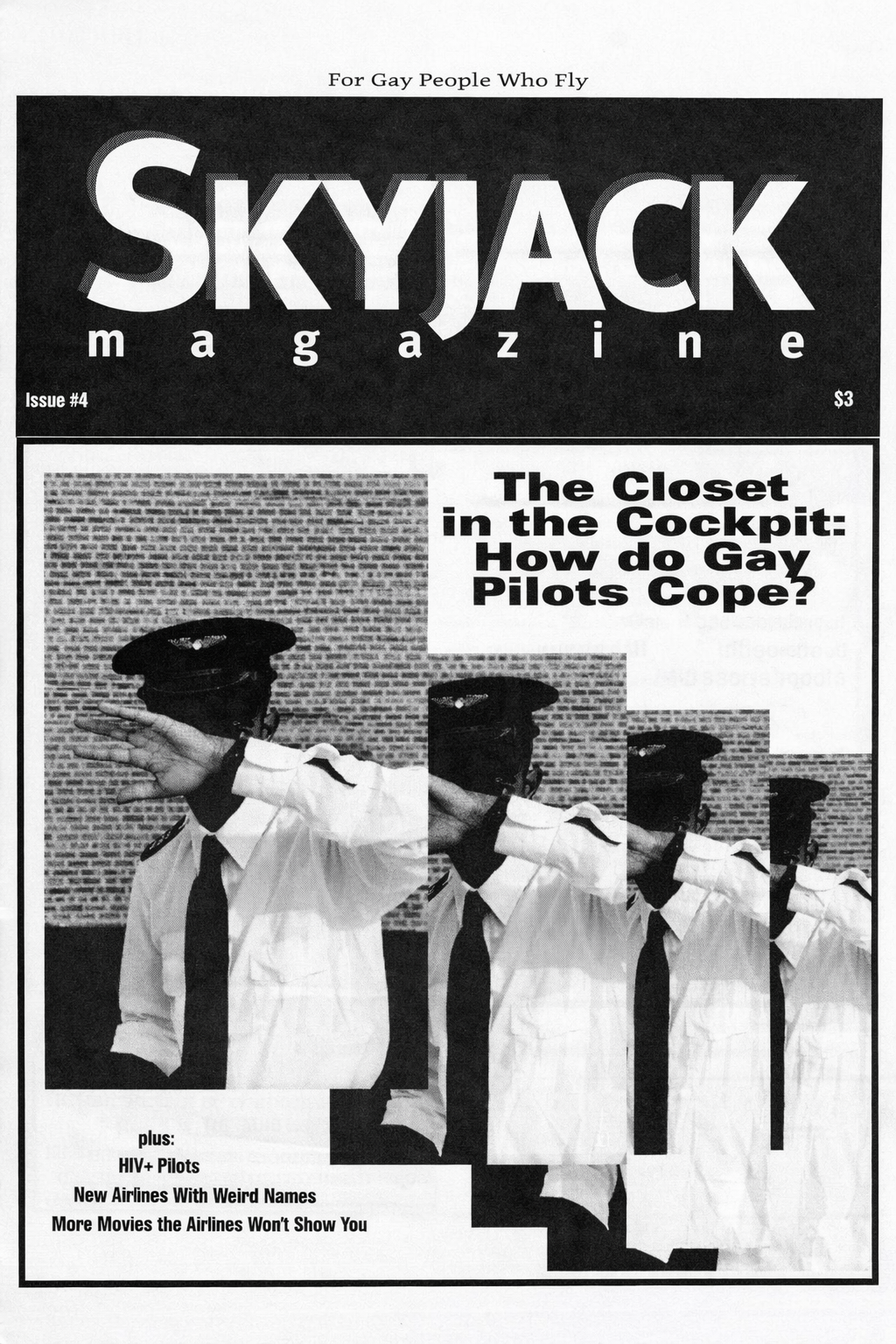
Some publications age like fine wine. Others age like an airline meal discovered beneath a seat cushion. Skyjack Magazine, the LGBTQ+ airline fanzine I founded and managed from 1993 to 1997, has somehow managed to do both: It remains surprisingly relevant while preserving the unmistakable flavor of an era when people booked flights by telephone, met potential partners through classified ads and still regarded an AOL address as suspiciously futuristic.
I’m now sharing the complete PDF of Skyjack Issue 4, originally published in 1994. Even better, the entire 11-issue archive is now part of the permanent collection at Seattle’s Museum of Flight, the world’s largest independent nonprofit air and space museum (you can view the full archives on the museum's site here). That institutional recognition confirms something I certainly didn’t contemplate while pasting columns into layouts and chasing contributors: Skyjack is important historical documentation about corners of airline culture that mainstream aviation media rarely acknowledged.
The magazine recorded the lives of LGBTQ+ pilots, flight attendants, frequent flyers and airline obsessives at a moment when queer visibility was increasing but workplace protections remained wildly inconsistent. (We also reviewed magnificently bad airline movies — we knew how to have fun, too.)
The Queer Aviation Time Capsule Continues
Readers who boarded this digital journey at the beginning may remember that Issue 1 introduced Skyjack as “the fanzine for gay people who fly,” combining airline news, queer culture, Hollywood camp and unabashed aviation nerdery. Issue 2 captured the celebratory energy surrounding Stonewall 25 and showed that the publication was gathering a genuine community. Issue 3 widened the lens further, covering AIDS stigma, discriminatory airline policies, United’s peculiar men-only flights and the printed classifieds that served as a kind of analog Grindr for people with frequent-flyer numbers. (Departure Level)
Issue 4 feels more confident and mature. The humor remains, but the magazine is increasingly comfortable confronting serious subjects without turning into an in-flight safety video narrated by a social worker.
Its centerpiece, “The Closet in the Cockpit,” examines the lives of gay commercial pilots. Writer Byron Cole describes the peculiar balancing act required in an industry where professional respectability, macho traditions and military backgrounds often created pressure to remain closeted. The article includes stories of pilots calculating what to reveal, when to reveal it and how colleagues might respond—sometimes with acceptance, sometimes with ignorance and occasionally with the emotional finesse of a baggage conveyor belt.
A companion piece, “How Do Gay Pilots Cope?,” broadens the discussion through additional firsthand accounts. What stands out today is the isolation. A flight attendant could often find a visible queer network within an airline, but pilots were fewer, more dispersed and working inside a profession that prized discretion almost as highly as seniority. These stories preserve voices that otherwise might never have entered the historical record.
By the way, I also explored the theme of queer identity and the allure of travel in my memoir, Prepare for Departure: Notes on a Single Mother, a Misfit Son, Inevitable Mortality and the Enduring Allure of Frequent Flyer Miles.
AIDS and the Airline Industry
Issue 4 also continues Skyjack’s urgent coverage of HIV and AIDS. “Lessons in Life” recounts the experience of pilots living with HIV, including the anxiety surrounding medical certification, workplace disclosure and the possibility that a diagnosis could abruptly end a career.
The article captures a grim contradiction of the period: Aviation professionals were trained to handle emergencies calmly, yet an HIV diagnosis could create a crisis for which their employers, unions and regulators had no humane checklist. The uncertainty was medical, financial and deeply personal.
Reading it three decades later is sobering. This wasn’t retrospective journalism; these contributors were writing from inside an unfolding epidemic. Skyjack offered space where airline employees could discuss fear, prejudice and survival in their own words—without being transformed into villains, statistics or cautionary tales.
Women Who Refused to Remain Grounded
“The Struggle to Fly,” by talented performer and writer Raven Hall, shifts attention to pioneering women aviators, including Harriet Quimby, Ruth Nichols, Helen Richey and Amelia Earhart. The article traces how women repeatedly challenged an industry that treated the cockpit like a private men’s club with wings.
Their obstacles ranged from institutional discrimination to outright sabotage of their ambitions. Yet they continued setting records, flying dangerous routes and proving—again and again—that gender had no bearing on aeronautical competence.
It’s a reminder that queer history and women’s history often share the same departure gate: Both involve talented people being told that established systems simply weren’t designed for them, followed by those people boarding anyway.
Turbulence is a Good Thing
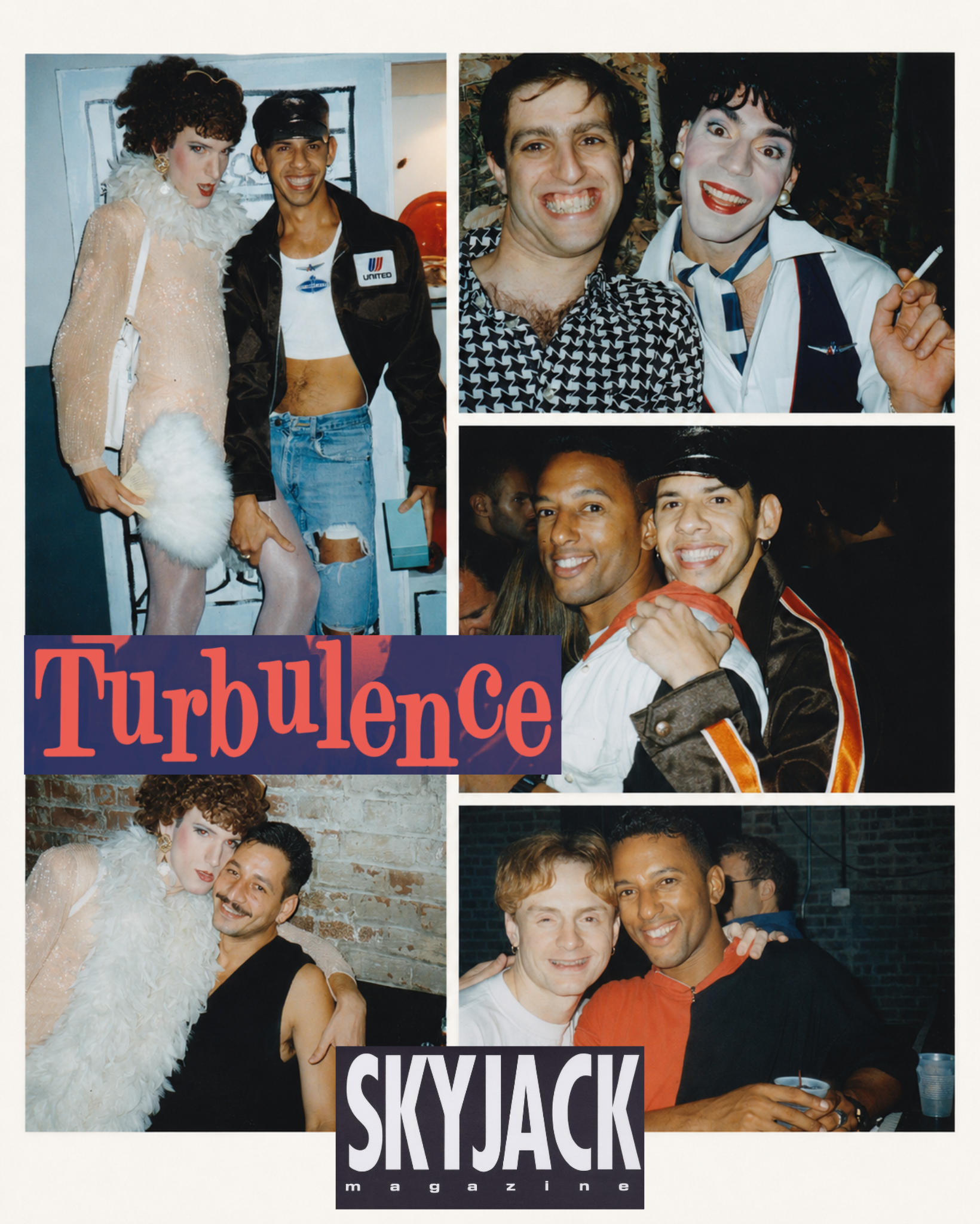
This issue also features coverage of the very first “Turbulence,” Skyjack Magazine’s fundraising event, which raised money for Volunteers for AIDS Information and Service, a not-for-profit group run by employees of American Airlines (which provided no financial support for the group). I wish I’d included more photos of the event, which took place at Tunnel club in New York City: Courteous, highly trained drag-queen flight attendants welcomed "passengers" into the festivities, while able-bodied go-go boy baggage handlers offered to check emotional baggage. Door prizes included USAir peanuts (roasted), British Airways amenity kits (fragrant), and books detailing Eastern Airlines fate under Frank Lorenzo (skewered). Turbulence grew even bigger in the coming years.
Elsewhere, Issue 4 crosses the Canadian border to examine workplace discrimination at Air Canada, returns to Hollywood for another round of “More Movies the Airlines Won’t Show You,” follows a flight attendant through an especially eventful trip report and revisits the Lockheed Electra—a beautiful turboprop with a résumé that included some unnerving structural problems.
There are also advertisements, cartoons, industry events, reader awards and wonderfully earnest classified notices. Together, they reveal not just what LGBTQ+ aviation enthusiasts worried about, but how they connected, joked, flirted and built community before social media made everyone permanently reachable and intermittently intolerable.
So settle in and open the complete PDF of Skyjack Magazine Issue 4. It’s funny, candid, occasionally startling and historically significant — a queer aviation time capsule that has finally achieved museum-quality status without losing its Xerox-machine soul.
••••••••
ABOUT MARK CHESNUT
Mark Chesnut is a New York City-based journalist, editor, travel industry consultant and public speaker with more than 30 years of experience. The winner of the 2019 NLGJA Excellence in Travel Writing Award, Mark is the author of the book Prepare for Departure. Follow him on Instagram!
Post a comment