
The Queer Case of Skyjack Magazine: LGBTQ+ Airline Zine Lands at The Museum of Flight
BY MARK CHESNUT
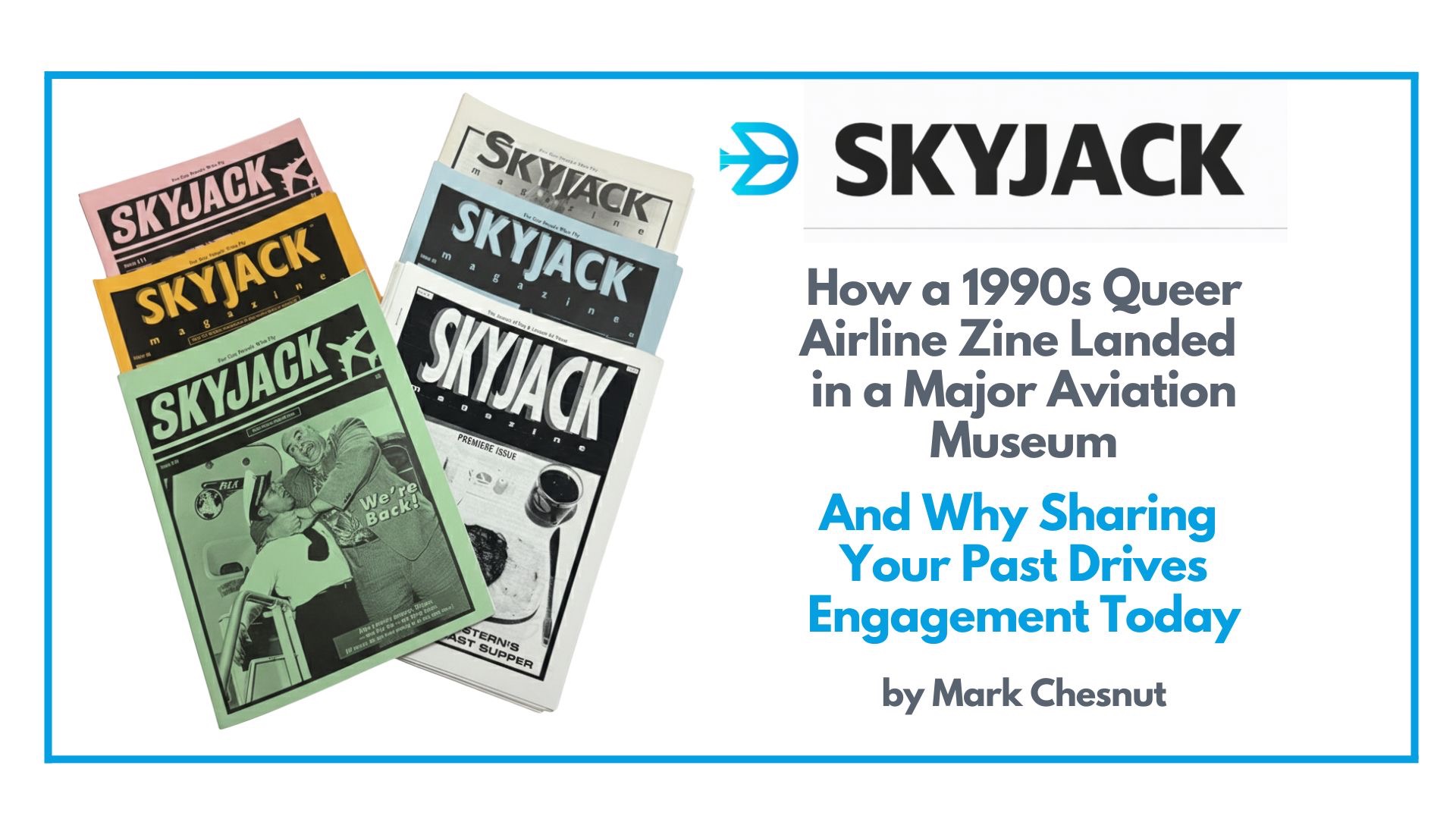
A scrappy little niche publication that I created in the 1990s has landed at the world's largest independent aviation museum. It's the latest chapter in the history of Skyjack Magazine, an LGBTQ+ air travel fanzine I founded in 1991. And it tells a bigger story about the evolution of the airline industry and the preservation of diverse voices.
For the most part, airline history is preserved with extraordinary precision — aircraft delivery dates, merger timelines, route development and flight attendant fashion.
What’s harder to find, however, is the human side. The stories that go beyond corporate data and press releases — especially when it comes to underrepresented voices.
Today, of course, the Internet has made it easier to explore just about anything. But in the 20th century, some people turned to something called fanzines — self-published, DIY booklets or magazines that specialized in niche interests and alternative voices — to delve into topics that mainstream media ignored.
Today, those publications provide a valuable peek into the pre-digital past.
Such is the case for Skyjack Magazine, a witty, gritty 1990s fanzine for LGBTQ+ “people who fly.” I founded Skyjack in 1993 and — over the course of five years — I teamed up with writers, artists and industry experts to take a deep dive into the complex issues linking LGBTQ+ identity, pop culture and the airline industry.
Back in the 1990s, if you had told me that my decidedly niche fanzine would one day be housed in the same museum as the first Boeing 747 ever built, I would have assumed you’d spent too much time in an unpressurized airplane cabin.
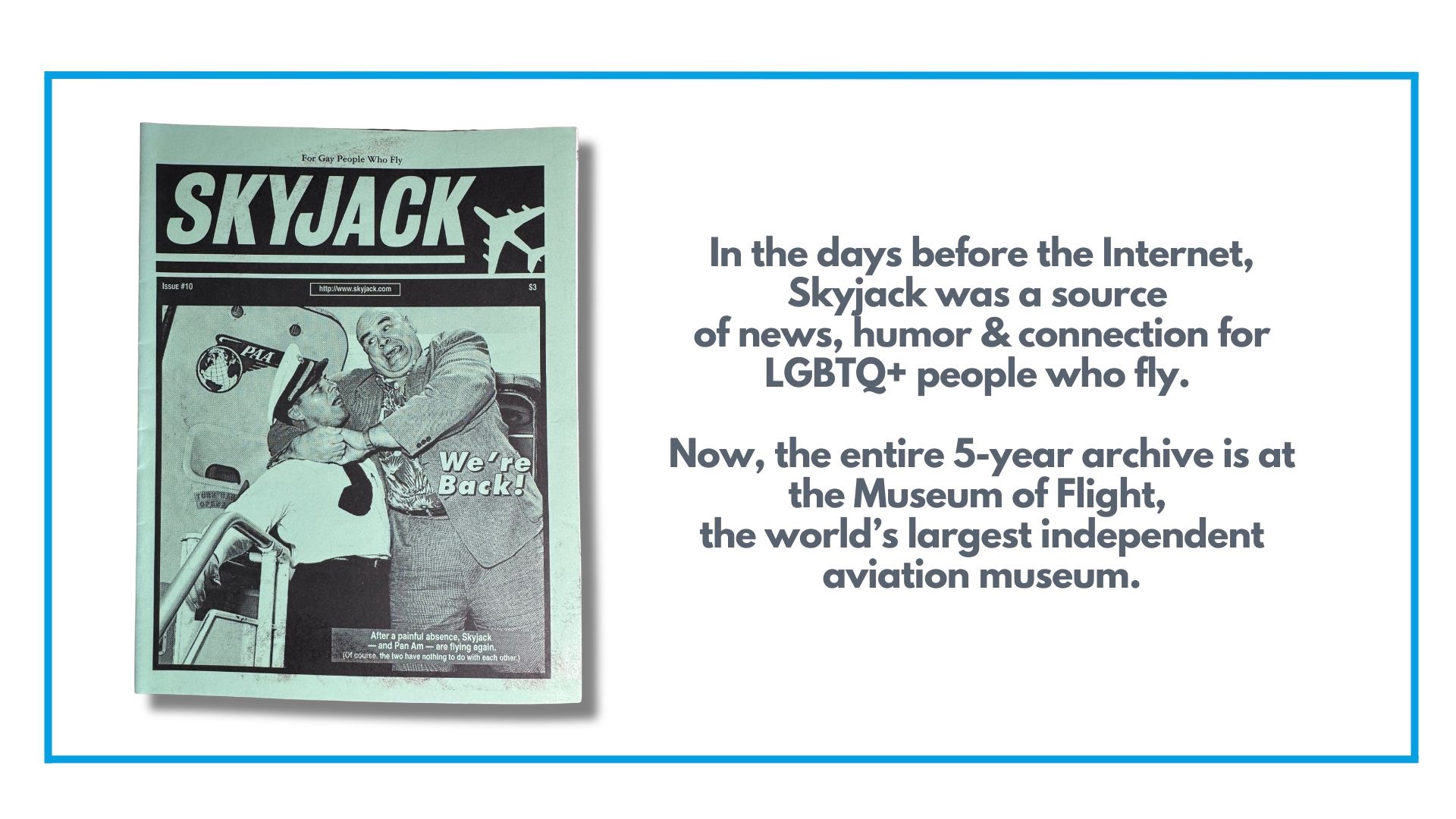
But now, I’m excited to share that the entire 11-issue Skyjack Magazine archive has been accepted into the permanent collection of the Museum of Flight in Seattle, the world’s largest independent aviation museum.
Skyjack’s presence in the facility’s research library means that industry experts, researchers and the general public will have access to hard-to-find material from a crucial time in airline history. The publication’s debut at the museum also exemplifies how showcasing and preserving lesser-known voices can drive engagement today. It’s a lesson that applies to other industries and content creators, too.
Targeting Niches, When it Wasn’t Easy
In 1993, the world of aviation was at a very different altitude. I was a young writer, editor and airline enthusiast with a desktop publishing program, a sharp tongue and an obsession. I wanted to create something I’d never seen before.
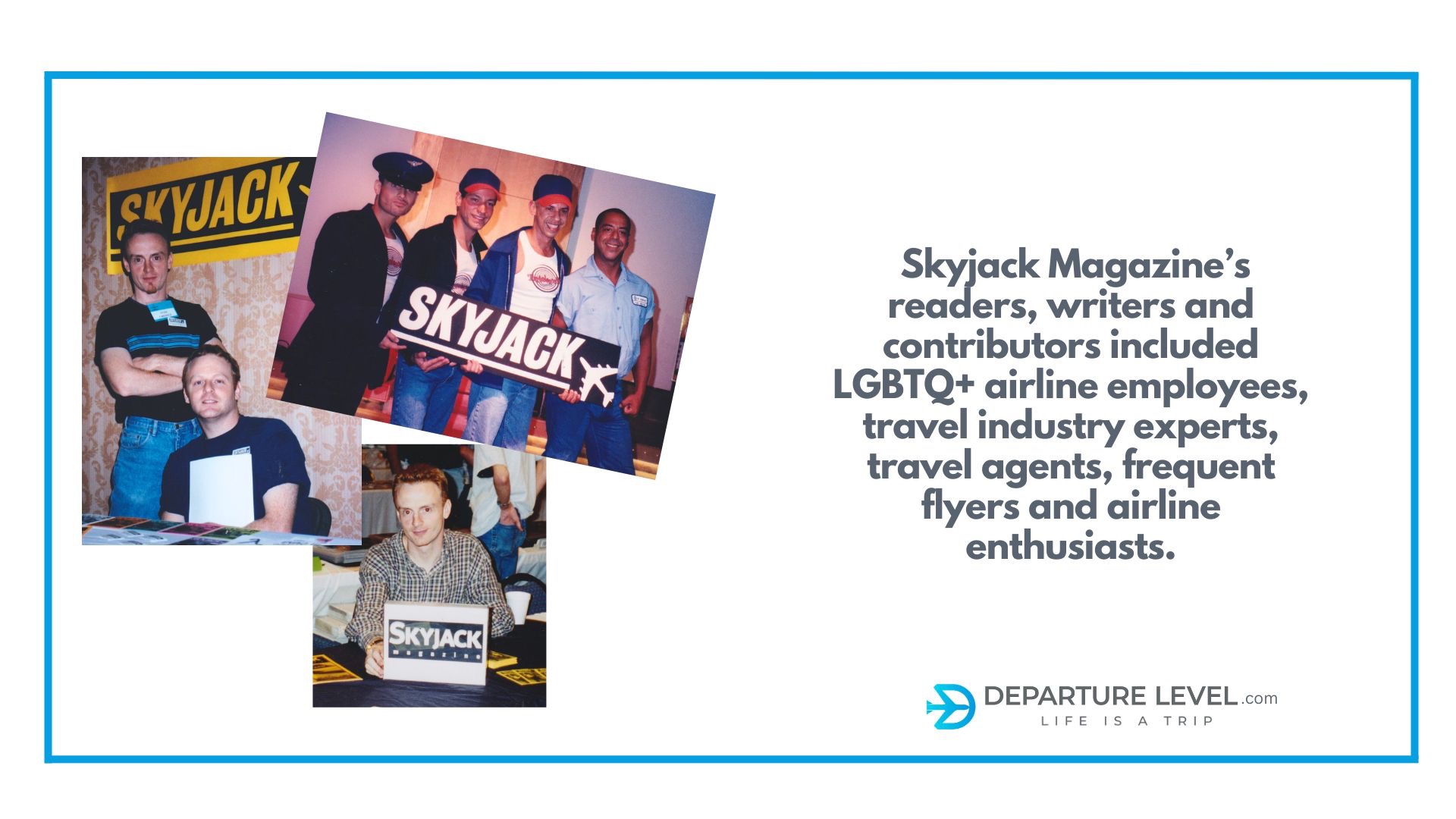
When I launched Skyjack Magazine, it was a DIY labor of love, mailed to an elite group of global subscribers. A handful of progressive bookstores also carried the magazine, and we also sold copies at airline memorabilia conventions, where Skyjack had a table and co-hosted a hospitality suite. In addition, we attracted media coverage by hosting “Inflight Movie Nights” at New York City bars and hosting “Turbulence,” a lively annual fundraising event that supported two nonprofit organizations for airline staff with serious illnesses.
Our readership — which consisted of airline employees, travel industry experts, travel agents, frequent flyers and airline enthusiasts — was tightly focused. Limited. But readers were passionate enough to sustain Skyjack Magazine for five years, through 11 jam-packed issues.
The research library at the Museum of Flight is an ideal home for the Skyjack archive. Its arrival in the permanent collection serves as a formal acknowledgment that the LGBTQ+ experience is not a “side note” to aviation history — it’s an integral part of it.
Revisiting the Airline Industry & LGBTQ+ Community of the 1990s
To understand why a major museum would want a fanzine from the mid-90s, you have to look at what was happening in the corporate world at the time. While “official” industry trade rags were focusing on load factors and route development, Skyjack Magazine was documenting a culture finding its voice — as well as air travel’s quirky, pop-culture aspects.
As a travel industry journalist, I started covering the LGBTQ+ segment for industry publications like Travel Weekly and TravelAge — as well as LGBTQ+ consumer media outlets like Passport Magazine and Out & About — in the mid 1990s.
But with Skyjack Magazine, I had a much sharper goal. From airline employee culture to queer airline enthusiasts, from corporate diversity initiatives to discrimination, from deliciously bad airline movies to closeted pilots, Skyjack Magazine tackled an array of complex issues.
Today, the contents of Skyjack are essential reading for anyone looking to gain a well-rounded understanding of the airline industry’s evolution.
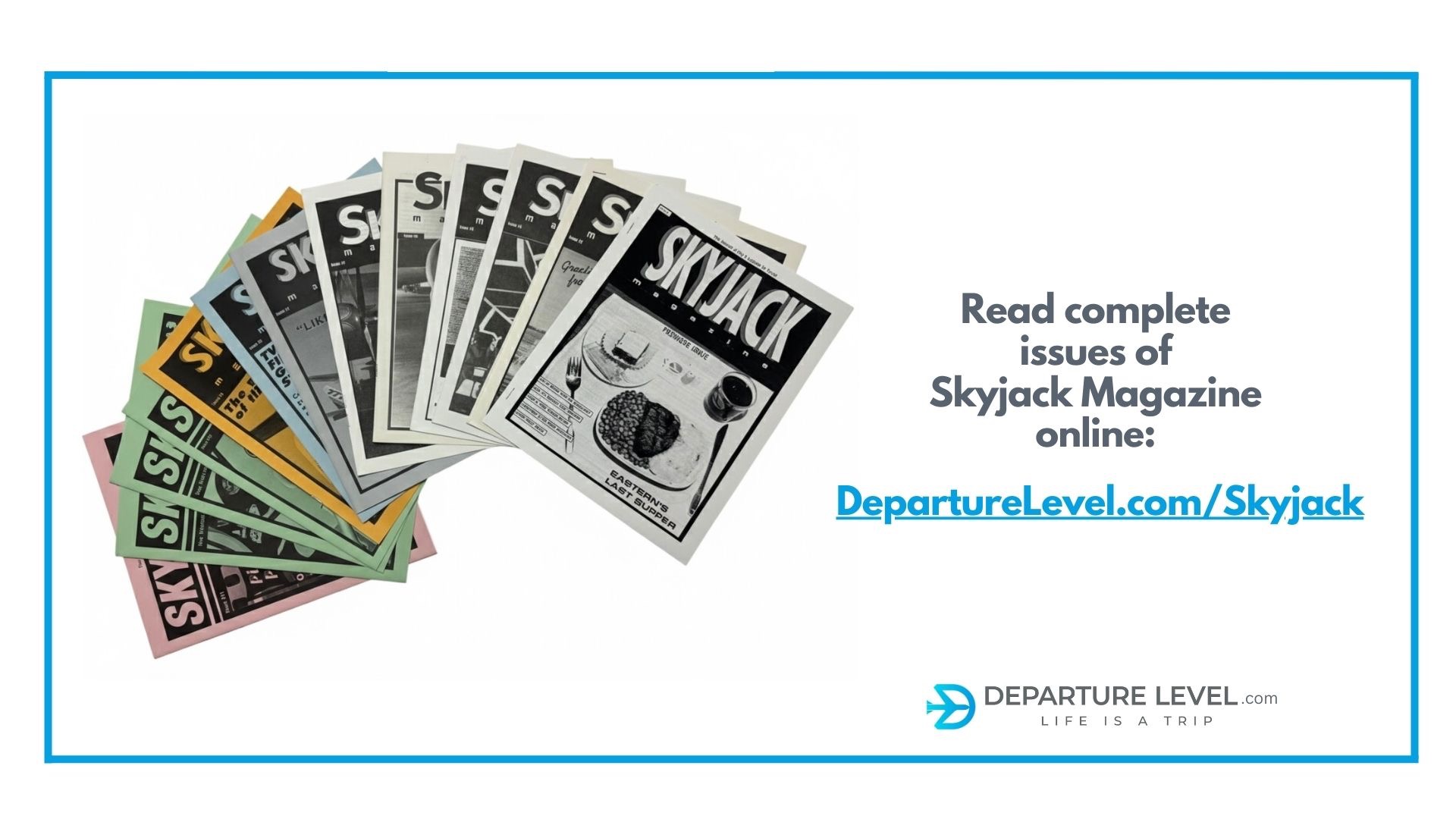
Take Skyjack Issue 3 (published in 1994), which I have just released digitally on my site, DepartureLevel.com. By the mid 1990s, the industry was a battlefield of contradictions. We were witnessing:
- The Demonization of Flight Attendants: Our cover story, “Much Ado About Gaetan,” tackled the “Patient Zero” myth head-on. Gaetan Dugas, an Air Canada flight attendant, had been turned into a global villain by the media, accused of “bringing AIDS to North America.” Skyjack interviewed his former colleague, who remembered him not as a monster, but as a flamboyant professional who lived and died under a shadow of prejudice.
- The Rise of Corporate Surveillance: In 1994, a California jury awarded a quarter-million dollars to a former Delta Air Lines employee after the airline was caught keeping a “secret list” of HIV-positive staff. They claimed it was for “training,” but the community saw it for what it was: AIDS-phobia.
- The Plodding Toward Progress: We reported on the first, hesitant steps toward same-sex travel benefits at Air Canada — wins that weren’t handed over easily but were fought for through government pressure and labor activism.
- Airline Advances: We praised Continental Airlines for serving as the official carrier of the Gay Games, as well as up-and-coming (and now defunct) Kiwi International Air Lines for boldly taking a stab at advertising to LGBTQ+ flyers.
Skyjack Magazine served as a valuable source for stories about a prickly era in corporate life. We documented the camp, the tragedy and the tenacity of a segment of the workforce that kept the airlines running while sometimes being denied benefits.
In today’s corporate world, Diversity, Equity, and Inclusion (DEI) is under attack in some segments. But as the Skyjack archives prove, DEI in the commercial airline industry was a journey that was worth it — and it sometimes took lawsuits, activism and underground networks to move forward so that employees could be treated equally.
But even as Skyjack Magazine addressed serious topics, we also celebrated humor, camp and the lighter moments in the lives of industry professionals and frequent flyers alike. Skyjack was designed to make readers smile as well as think (the issue about the mile high club, though, not only made some people laugh — it pushed a few to cancel their subscriptions. Not everyone has the same sense of humor).
Takeaways We Can All Learn From
Skyjack Magazine’s acceptance into the Museum of Flight teaches us several lessons that can apply to other industries as well. I keep all of this in mind as a journalist and also as a content specialist when I write copy, custom content and sponsored material for my clients:
- What feels niche today can become essential tomorrow.
- Unfiltered perspectives engage audiences in ways that the corporate world struggles to do.
- Looking back creates authority when moving forward.
- Traditionally printed, non-digital content has a unique advantage over social media and what’s online: permanence. (Now, having said that, please follow me on Instagram anyway!
Questions For You
As I continue to digitize and release the remaining issues of Skyjack Magazine, I invite you to step back into the 1990s with me: You can read entire issues of Skyjack on my site, DepartureLevel.com, and visit the Museum of Flight.
I’d also love to hear from you about the following:
- How does your organization or industry preserve the lesser-known aspects of its history?
- How did people in other industries communicate, rally together and share experiences and passions in the years before the Internet?
- Are we doing enough to ensure that the archives of tomorrow fully reflect the diversity of the people who built our workplaces today?
- If you work (or worked) in the airline industry, what memories would you like to share?
Let’s keep the conversation at cruising altitude.
••••••••
About Mark Chesnut
Mark Chesnut is a New York City-based journalist, editor, travel industry consultant and public speaker with more than 30 years of experience. The winner of the 2019 NLGJA Excellence in Travel Writing Award, Mark is the author of the book Prepare for Departure. Follow him on Instagram!
Post a comment